
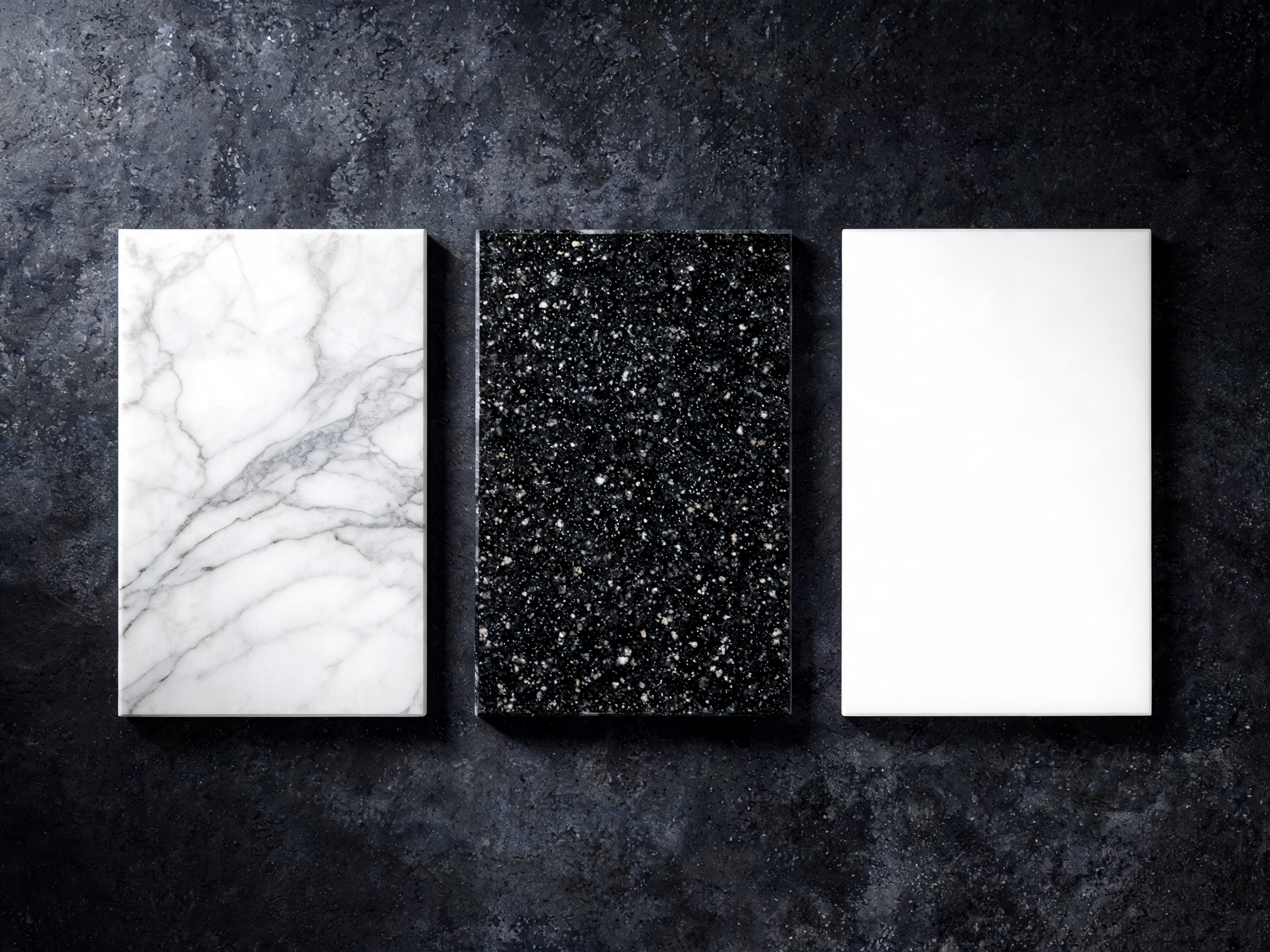
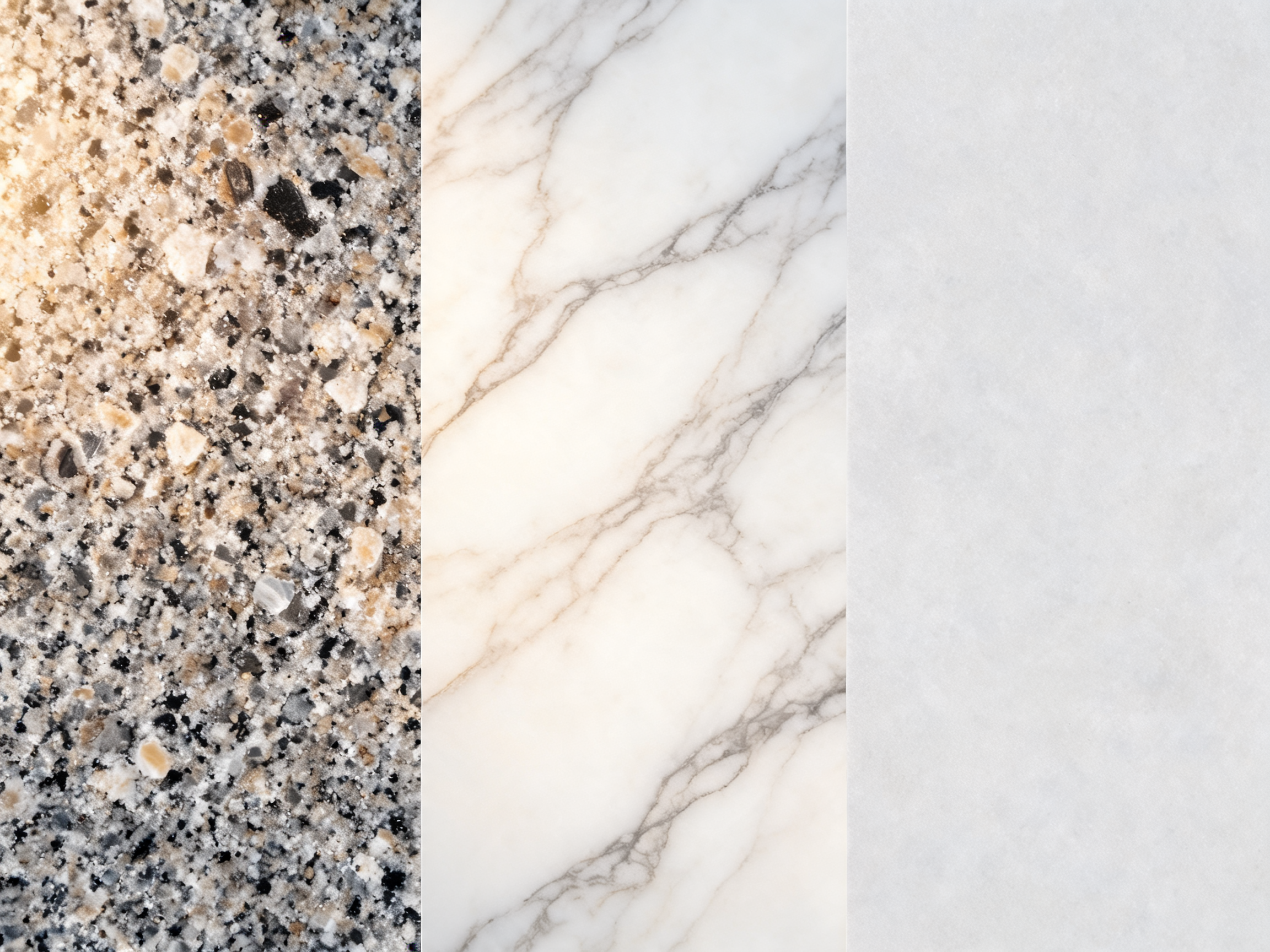
You’re standing in front of three stone samples. One is marble — beautiful, classic, but requires sealing every 6 months. One is granite — durable, lower maintenance, but pricier upfront. One is quartz — engineered, consistent, but not “natural stone.”
Which one is actually right for your project? The answer depends on three things: how the space will be used, your maintenance tolerance, and your budget. This guide breaks down each stone type so you can make the decision with confidence.
Quick Comparison: Quartz vs Granite vs Marble
| Feature | Granite | Marble | Quartz |
|---|---|---|---|
| Durability | Excellent | Good (etches easily) | Excellent |
| Maintenance | Moderate (seal 1x/year) | High (seal 6 months) | Low (no sealing) |
| Cost | $50–$150/sq ft | $40–$200/sq ft | $60–$120/sq ft |
| Heat Resistant | Yes | No (can etch) | Yes |
| Stain Resistant | Good | Poor (acidic liquids) | Excellent |
| Appearance | Natural, varied | Elegant, timeless | Consistent, modern |
| Lifespan | 25+ years | 20+ years (with care) | 25+ years |
| Best For | Kitchens, busy spaces | Bathrooms, low-traffic | Kitchens, hotels, high-use |
Granite: The Durable Workhorse
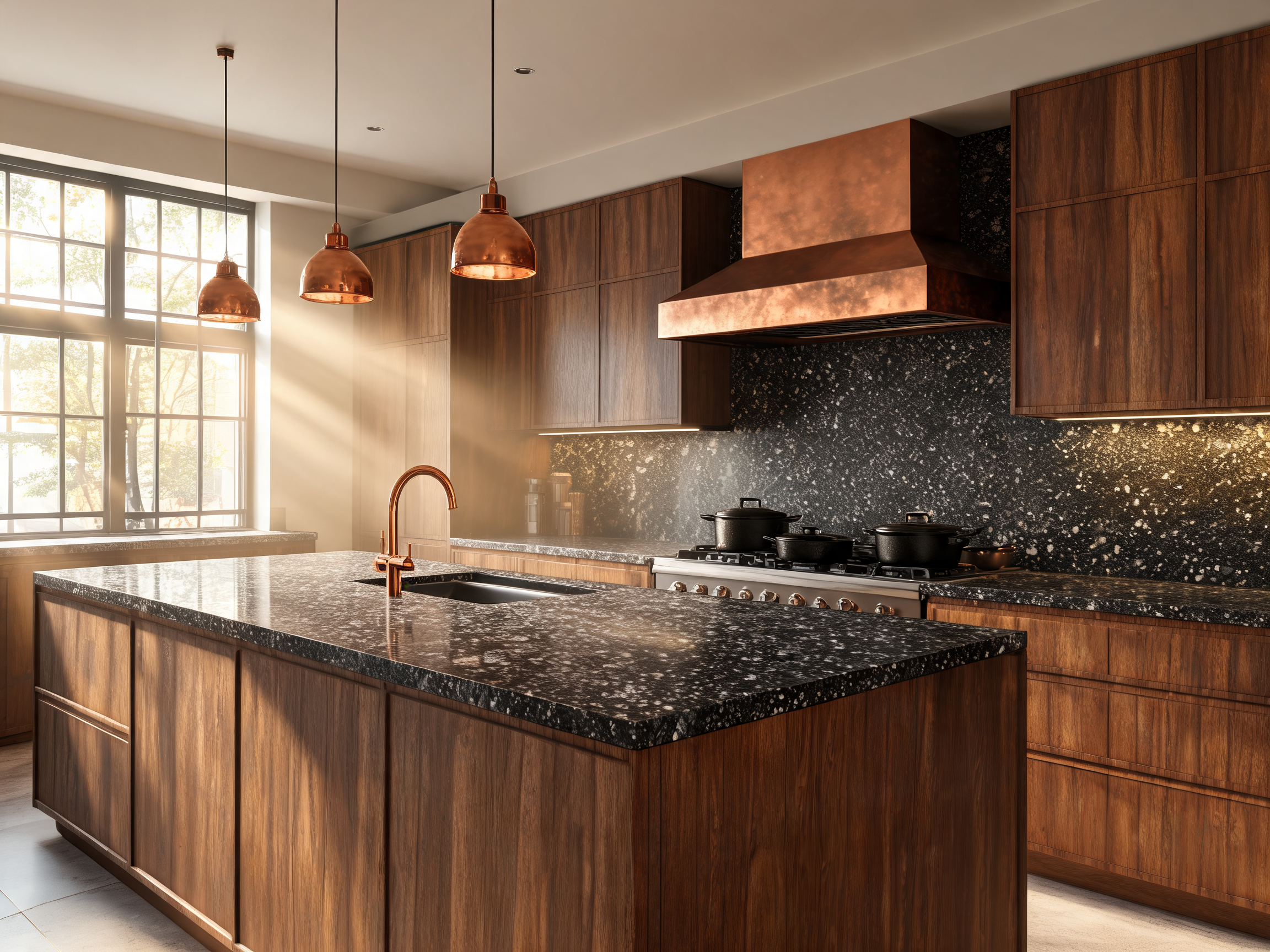
Granite is a natural igneous rock formed deep underground from cooled magma. Each slab is unique — the mineral composition creates distinct color patterns and veining. Common colors: black, grey, pink, red, white.
Pros of Granite
- Extremely durable — Rates 7-8 on the Mohs hardness scale. Resists scratches and chips better than marble.
- Heat resistant — Can handle hot pots and pans without damage.
- Unique appearance — No two slabs are identical.
- Proven track record — 25+ years of real-world performance in kitchens and bathrooms.
Cons of Granite
- Requires sealing — Granite is porous. Seal it once per year to prevent stains from oil, wine, lemon juice.
- Pricier than quartz — Typically $50–$150/sq ft installed.
- Maintenance burden — Acidic substances (vinegar, citrus) can etch if left sitting.
Best for: Kitchens with moderate to heavy use, bathrooms, any space where durability matters more than low maintenance.
Marble: The Luxury Choice (with Caveats)
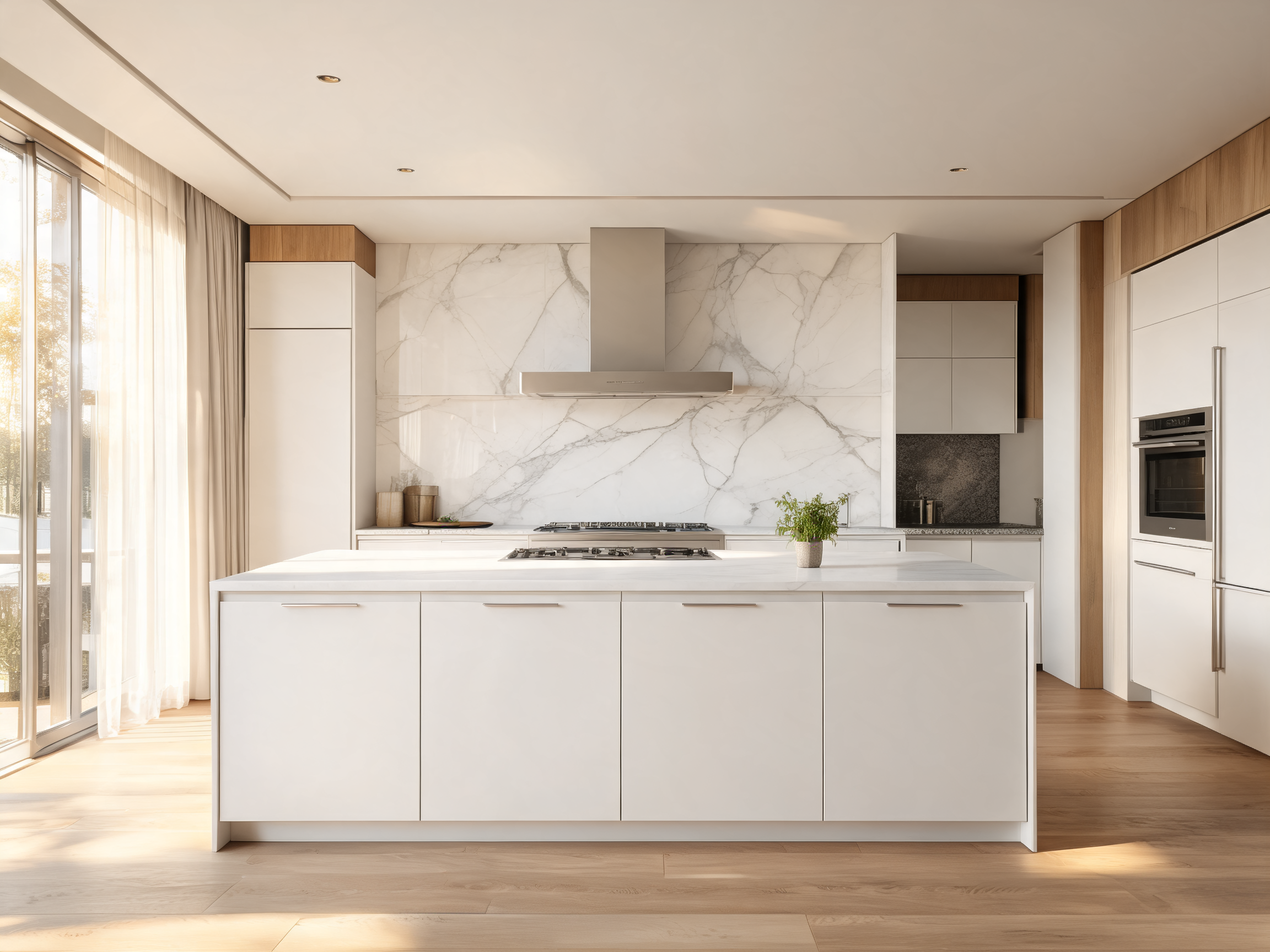
Marble is metamorphic limestone — formed when limestone is subjected to heat and pressure underground. It’s softer than granite and more porous. Classic colors: white, grey, black, pink. Famous types: Carrara, Calacatta, Statuario.
Pros of Marble
- Stunning aesthetics — Marble is the gold standard for luxury. The veining is dramatic, timeless, and instantly elevates a space.
- Cooler to the touch — Ideal for baking areas or bar countertops.
- Prestigious — What luxury hotels and fine dining restaurants specify.
- Timeless appeal — Marble has been used for 2,000+ years. It never goes out of style.
Cons of Marble
- Etches easily — Acidic substances (lemon juice, vinegar, wine, coffee) leave dull marks on the surface.
- Stains readily — Porous surface absorbs liquids. Oil, red wine, and tomato sauce can leave permanent marks.
- Requires constant maintenance — Seal every 6 months. Wipe spills immediately.
- Expensive — $40–$200/sq ft installed.
- Soft — Rates only 3-4 on the Mohs hardness scale.
Best for: Bathrooms (low-traffic areas), luxury residential projects, hospitality settings where aesthetics trump functionality.
Quartz: The Low-Maintenance Option
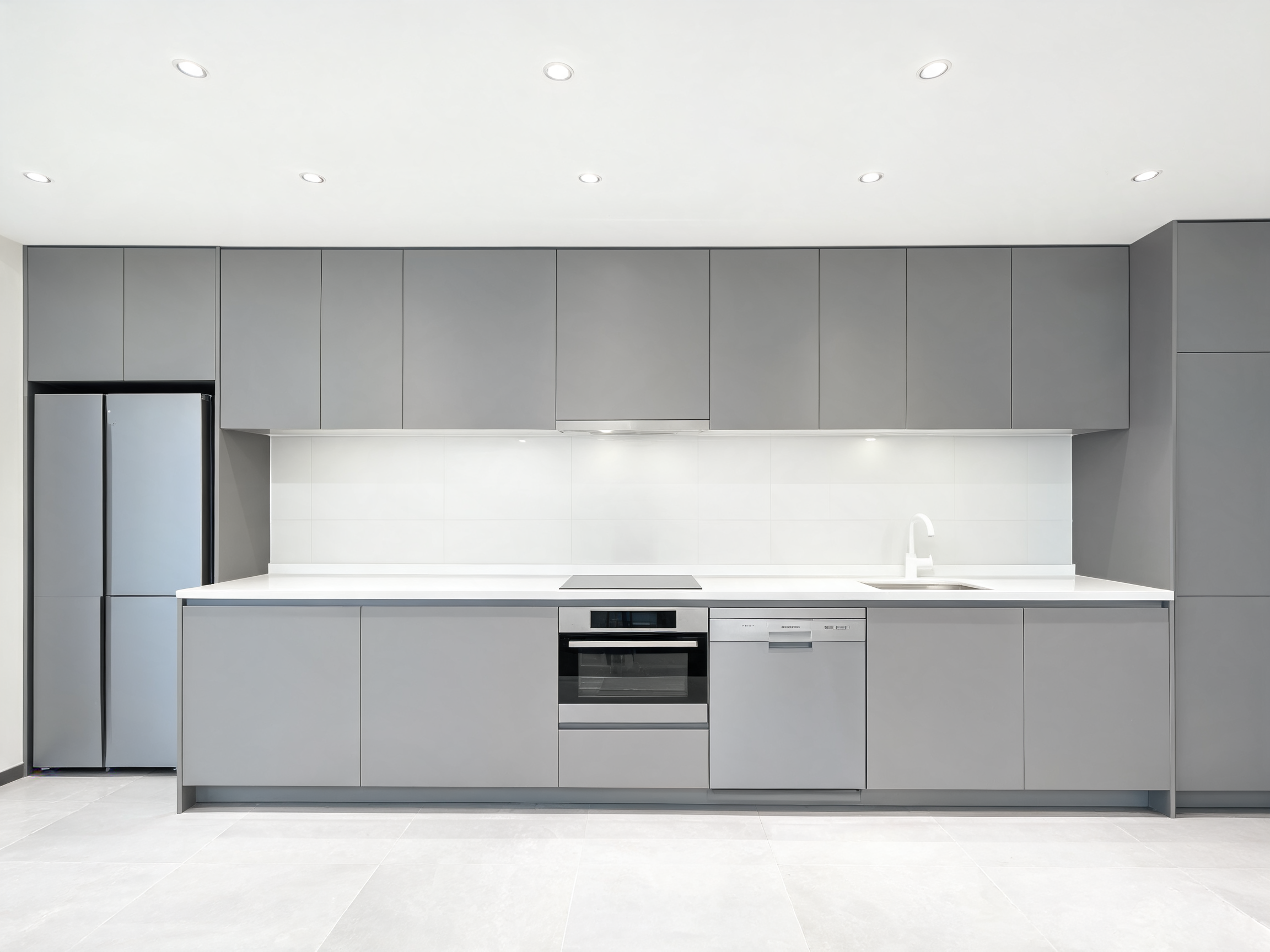
Quartz is engineered stone — 90%+ natural quartz crystals bound together with resin and pigments. Unlike granite and marble, it’s manufactured in a controlled environment, so every slab is consistent.
Pros of Quartz
- No sealing required — The resin binding makes quartz non-porous.
- Consistent appearance — Every slab looks the same. Perfect for large hospitality projects.
- Low maintenance — Wipe with soap and water. That’s it.
- Excellent durability — Rates 7 on the Mohs scale. Resists stains, scratches, heat, and bacteria.
- Wide color range — Including “marble-look” quartz that mimics natural stone without the maintenance burden.
Cons of Quartz
- Not “natural stone” — Some clients perceive engineered quartz as less prestigious.
- Heat sensitivity — Excessive heat (direct from a hot pan) can damage the resin. Use trivets.
- Limited edge profiles — Can’t be shaped as freely as natural stone.
Best for: Kitchens with heavy use, hotels and hospitality projects (batch consistency is critical), rental properties, busy families.
Cost Breakdown: Granite vs Marble vs Quartz
Material Cost (per sq ft)
- Granite: $40–$120/sq ft
- Marble: $30–$150/sq ft
- Quartz: $50–$100/sq ft
Lifetime Cost (25 years, 50 sq ft kitchen)
- Granite: $2,500–$8,000 (material + installation + sealing)
- Marble: $2,000–$10,000+ (material + installation + frequent sealing + potential repairs)
- Quartz: $2,500–$7,500 (material + installation, no sealing)
Takeaway: Over 25 years, quartz and granite have similar total costs. Marble is the most expensive when you factor in maintenance.
Which Stone for Your Space?
Choose Granite If:
- You have a kitchen with moderate to heavy use
- You don’t mind annual sealing
- You value unique, natural variation
- Budget is $50–$150/sq ft
Choose Marble If:
- You’re designing a luxury bathroom or low-traffic space
- Aesthetics matter more than functionality
- You’re willing to commit to frequent maintenance (sealing every 6 months)
- Budget is $40–$200/sq ft
Choose Quartz If:
- You have a busy kitchen or high-traffic space
- You want zero maintenance (no sealing, no special care)
- Batch consistency is critical (hospitality projects, multi-unit builds)
- Budget is $60–$120/sq ft
FAQ: Stone Selection
Can I use marble in a kitchen?
Technically yes, but not recommended. Marble etches from acidic foods and requires constant maintenance. If you love marble’s look, consider marble-look quartz instead — you get the aesthetics without the headaches.
Which stone is most durable?
Granite and quartz are equally durable (both 7+ on Mohs scale). Marble is softer (3-4 Mohs) and more prone to scratching and etching.
Is quartz really “fake”?
No. Quartz is 90%+ natural stone (crushed quartz crystals). The resin binder is what makes it non-porous and low-maintenance. It’s engineered, not fake.
How often do I need to seal granite?
Once per year is standard. Some high-traffic kitchens may need sealing every 6 months. Quartz requires zero sealing.
What’s the best stone for a hotel or rental property?
Quartz. Consistency across batches is critical for large projects. Low maintenance reduces tenant damage. Cost-effectiveness improves ROI.
Can I put hot pots directly on quartz?
No. Use trivets or hot pads. Excessive heat (above 300°F) can damage the resin. Granite and marble handle heat better, but trivets are still recommended for all stone types.
Which stone adds the most value to a home?
Granite and marble both add resale value. Quartz is increasingly valued for its practicality. The real value comes from the overall kitchen design, not the stone type alone.
Can I get a marble-look without marble’s maintenance?
Yes. Marble-look quartz is engineered to mimic marble’s veining without the etching and sealing requirements. Popular brands: Caesarstone, Silestone, LG Viastone.
Where can I source granite, marble, and quartz?
Hoàng Kha Stone supplies all three types — granite, marble, and quartz — for residential, hospitality, and commercial projects. We offer material samples, custom fabrication, and wholesale pricing for builders and distributors. Contact: info@hoangkhastone.com
Ready to Choose Your Stone?
If you’re sourcing stone for a residential, hospitality, or commercial project, Hoàng Kha Stone can supply all three types with material samples, custom fabrication, and competitive pricing.
Contact us:
📧 info@hoangkhastone.com / sales1@hoangkhastone.com
📞 +1 808-844-2929 (Honolulu, Hawaii)
🌐 hoangkhastone.com
Send us your project specs, and we’ll recommend the best stone for your needs.
